

IN PERSON IN AUSTIN AND ONLINE ACROSS TEXAS THERAPY FOR EMDR AND TRAUMA
Space for
healing
from what you've been carrying.
Sound Familiar?...
It feels like something from the past is still showing up inside of you now.
It feels like something from the past is still showing up inside of you now. Even when you are doing your best to move forward, there may be moments where your body, emotions, or reactions feel stronger than you expect. You might notice yourself getting overwhelmed, shutting down, or feeling on edge in ways that don’t always make sense in the present moment. On the outside, you may be managing a lot and getting through each day, while inside it can feel like something is still being held.
When this is happening, it is often your system doing what it learned to do in order to protect you. In our work together using EMDR and a trauma-informed approach, we begin to gently support your system in processing these experiences so they feel less activated over time and more connected to the present. This is not about forcing anything to change, but creating space for your mind and body to respond in new ways as healing unfolds.
From here we
begin
to support your system in processing what’s been carried..
Therapy can support your system in feeling
more regulated and at ease again.
EMDR (Eye Movement Desensitization and Reprocessing) is a therapy approach that helps support your brain and body in processing experiences that feel stuck or still emotionally active. Instead of focusing only on talking through what happened, EMDR helps your system gently work through the emotional and physical responses that may still be connected to past experiences. This can help those experiences feel less overwhelming and more in the past, rather than showing up so strongly in the present.
In our work together, EMDR is used in a paced and supportive way that honors what feels manageable for you. We focus on helping you feel grounded and resourced first, and then gently begin to work with what your system is holding. The process is collaborative, and we move at a speed that helps you feel safe enough to stay connected to yourself throughout the work.
What we’ll work on
Here’s what we’ll do together:
Create a steady, supportive space where you don’t have to hold everything on your own.
Build tools for grounding and emotional regulation so you feel more supported in your day-to-day life.
Gently identify experiences that may still feel “stuck” or activated in the present.
Use EMDR in a paced and supported way to help your brain and body process what has been carried.
Support you in feeling more present, grounded, and less impacted by the past over time
FAQS
What others have wondered about EMDR.
What is EMDR and how does it work?
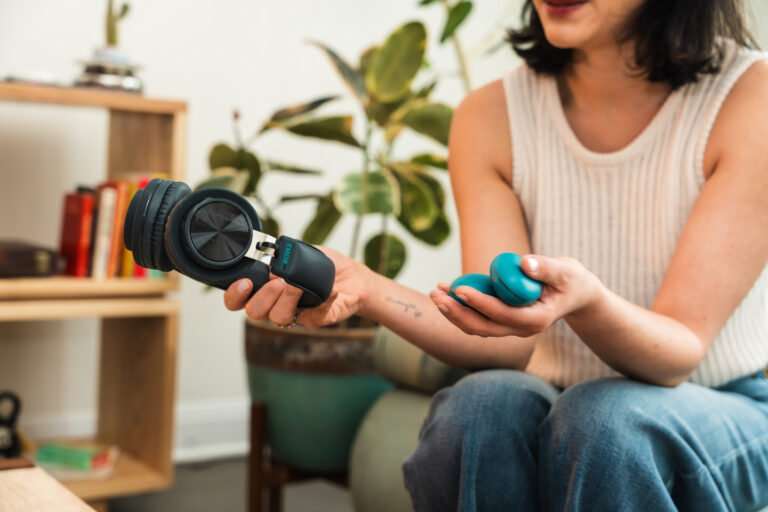
EMDR (Eye Movement Desensitization and Reprocessing) is an evidence-based therapy approach that helps your brain and body process experiences that still feel emotionally or physically “stuck.” It uses bilateral stimulation (such as eye movements, tapping, or sounds) to support your nervous system in gently working through how past experiences are stored. Instead of only talking through what happened, EMDR helps your system process these experiences so so they feel less intense over time and more like something that belongs in the past rather than the present.
What does an EMDR session feel like?
What can EMDR be used for?
EMDR is a therapy approach that can help with a wide range of experiences that feel emotionally or physically “stuck” in the nervous system. It is often used to support people who have experienced trauma, but it can also be helpful for distressing life events, ongoing stress, anxiety, grief, relationship wounds, or experiences that still feel present in the body and mind even after they’ve happened.
Many people use EMDR when they notice certain memories, emotions, or triggers continue to show up in daily life in ways that feel overwhelming or hard to shift, even when they logically know they are in a different place now. EMDR helps support your system in processing these experiences so they feel less activated over time and more connected to the past rather than the present
More questions? Check out my FAQs page.